
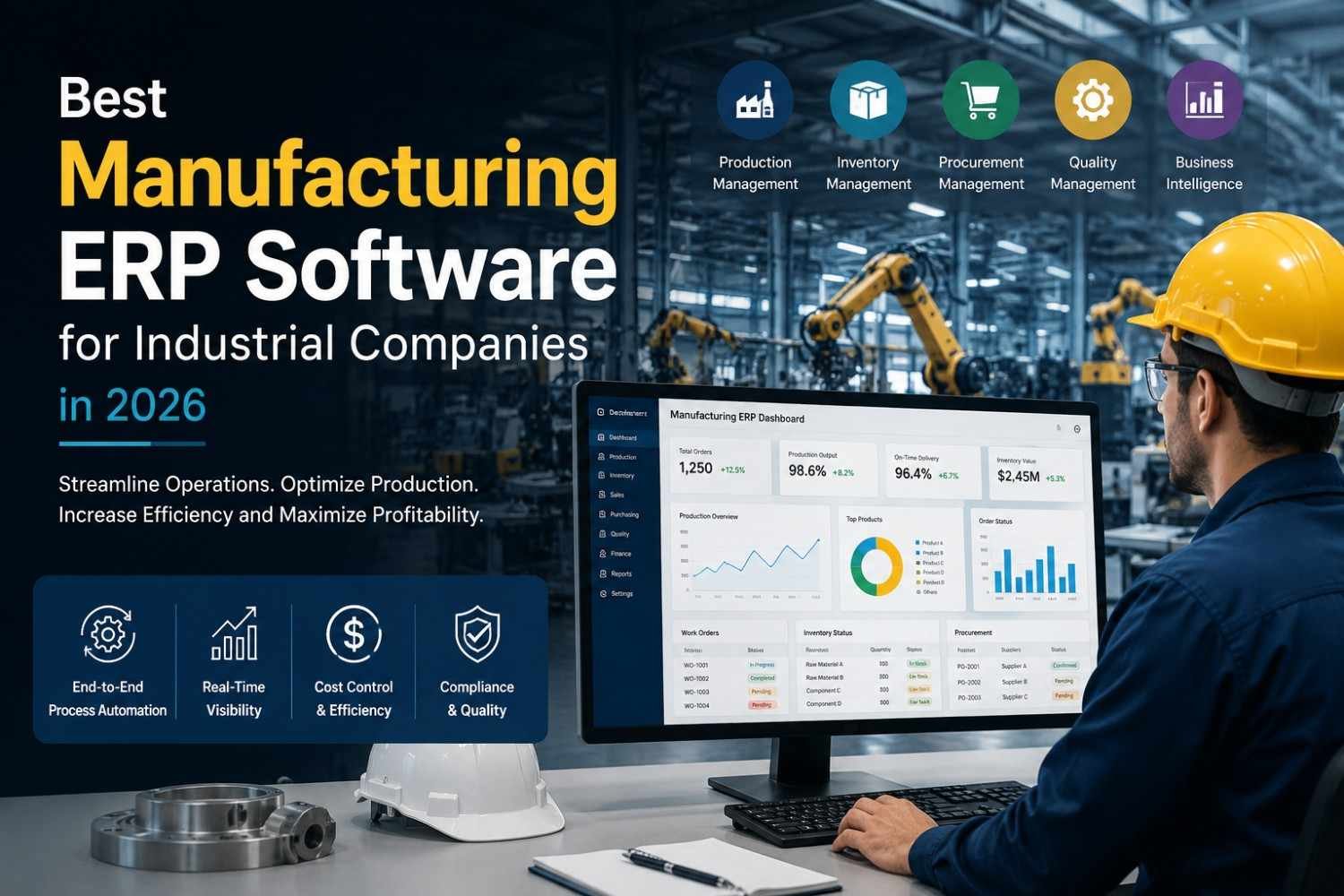
Manufacturing companies are under increasing pressure to improve operational efficiency, reduce production costs, manage supply chains, and gain real-time visibility into business performance. Traditional spreadsheets and disconnected systems often create bottlenecks that limit growth.
This is where Manufacturing ERP Software becomes valuable. Modern ERP platforms integrate production planning, inventory management, procurement, finance, quality control, and analytics into a single system.
For industrial organizations, selecting the right ERP solution can directly impact productivity, operational visibility, and long-term scalability.
What Is Manufacturing ERP Software?
Manufacturing ERP Software is a business management platform designed to connect critical manufacturing processes across an organization.
A typical ERP system integrates:
- Production planning
- Inventory management
- Supply chain operations
- Procurement
- Finance and accounting
- Asset management
- Quality control
- Reporting and analytics
Instead of using separate applications for each department, manufacturers can centralize operations through one platform.
Key Benefits of Manufacturing ERP Software
1. Real-Time Operational Visibility
Manufacturers often struggle with fragmented data. Cloud ERP solutions provide:
- Live production tracking
- Inventory visibility
- Order monitoring
- Performance dashboards
- Financial reporting
This allows managers to make faster decisions using current information.
2. Improved Production Planning
Production planning tools help companies:
- Forecast demand
- Schedule resources
- Reduce downtime
- Optimize production cycles
Effective planning reduces waste and improves overall efficiency.
3. Inventory Optimization
Inventory management is one of the most important functions of manufacturing ERP software.
Benefits include:
- Reduced stock shortages
- Lower inventory carrying costs
- Automated replenishment
- Better warehouse visibility
4. Financial Management Integration
Modern ERP platforms integrate finance with operations. This provides:
- Cost tracking
- Budget monitoring
- Profitability analysis
- Financial forecasting
Essential Features to Look For
Production Management
Production management capabilities should include:
- Work order management
- Shop floor control
- Production scheduling
- Resource planning
- Capacity management
Supply Chain Management
Strong supply chain functionality helps businesses:
- Track suppliers
- Monitor procurement
- Improve logistics visibility
- Reduce delays
Business Intelligence and Analytics
Manufacturers increasingly rely on business intelligence software for operational insights.
Key capabilities include:
- KPI dashboards
- Predictive analytics
- Custom reports
- Data visualization
Workflow Automation
Workflow automation can reduce manual tasks by automating:
- Purchase approvals
- Inventory updates
- Production alerts
- Compliance reporting
Cloud ERP vs On-Premise ERP
Cloud ERP
Advantages:
- Lower upfront costs
- Faster deployment
- Automatic updates
- Remote accessibility
- Better scalability
Cloud ERP solutions are becoming the preferred option for many industrial organizations.
On-Premise ERP
Advantages:
- Greater infrastructure control
- Internal hosting
- Custom security configurations
However, maintenance costs are often significantly higher.
How AI Is Transforming Manufacturing ERP
Artificial intelligence is becoming a major component of enterprise ERP software. AI-powered ERP systems can provide:
- Predictive maintenance insights
- Demand forecasting
- Inventory optimization
- Production recommendations
- Risk detection
Manufacturing ERP Trends for 2026
- AI-Powered Analytics
- Increased Automation
- Cloud-First Deployments
- Sustainability Tracking (Energy, Carbon emissions, ESG compliance)
Frequently Asked Questions
What is the best manufacturing ERP software?
The best solution depends on company size, production complexity, industry requirements, and budget.
Is cloud ERP suitable for manufacturers?
Yes. Cloud ERP provides scalability, remote access, automatic updates, and lower infrastructure costs.
Can ERP improve production efficiency?
Yes. ERP software can improve planning, inventory control, reporting, and workflow automation.
Conclusion
Manufacturing ERP Software has become a core technology for industrial companies seeking operational efficiency, better visibility, and long-term scalability.
The right ERP solution can integrate production management, financial management, supply chain operations, business intelligence, workflow automation, and Industrial IoT capabilities into a unified platform.
As organizations continue investing in digital transformation, cloud ERP and AI-powered automation are expected to play an increasingly important role in manufacturing operations throughout 2026 and beyond.